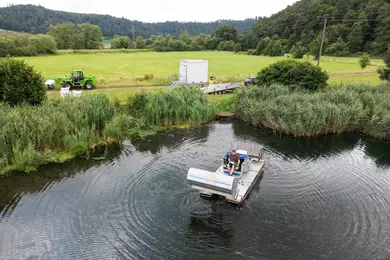
How to avoid costly dredging in your lake
Community and golf course lakes and ponds are valuable amenities - enhancing property values, elevating aesthetics, and offering recreational or visual appeal. But what happens when sediment starts to accumulate and threatens to turn your pond into a shallow, mucky eyesore?
The traditional answer - dredging - is expensive, disruptive, and often unnecessary if you catch the problem early. Whether you’re a community manager or a golf course superintendent, understanding how to prevent sediment buildup and working with your lake management provider is key to protecting your investment.
Why sediment accumulates
Most sediment comes from natural organic processes - leaves, grass clippings, algae, and plant material that sink and decay over time. Add in runoff from fertilized lawns, pet waste, or eroded soils, and your pond becomes a nutrient sink that fuels algae growth and sludge formation.
Over time, this sediment builds up, reducing water depth, impairing aesthetics, and potentially leading to fish kills, foul odors, or poor irrigation quality. If left unchecked, the only option may be dredging - a major project with a major price tag.
For golf courses, this means unattractive ponds that distract from play and may interfere with irrigation systems.
For communities, sediment can lead to complaints from residents and declining property appeal.
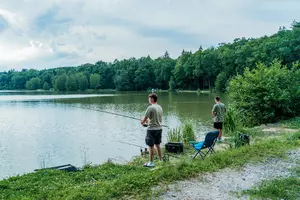
Dredging isn’t the only option
While dredging physically removes accumulated sediment, it doesn’t solve the root causes. It’s also disruptive and expensive, requiring permits, heavy equipment, staging areas, and often the temporary loss of access or use. Instead, consider working with your lake management provider to take a proactive, preventative approach that includes:
Shoreline buffers with native plants to filter runoff
Education around limiting fertilizer and pet waste
Aeration systems to increase oxygen and support natural decomposition
Biological sediment reducers, like Oase SchlixX Plus, to safely break down organic sludge
What Is SchlixX Plus?
SchlixX Plus is a natural sediment treatment that uses oxygen and specialized bacteria to break down the organic muck at the bottom of your lake or pond. It’s applied directly to the waterbody and starts working immediately - without disrupting fish, plants, turfgrass, or community access.
A current Oase partner successfully removed the equivalent of 600 cubic meters (approximately 785 cubic yards) of organic sediment for under $2,000 using SchlixX Plus. When compared to mechanical dredging - which can cost $35,000 to $55,000 for the same volume - this represents a dramatic cost savings. Communities and golf courses are seeing noticeable sediment reduction and improved water clarity in just a few months. Even more importantly, SchlixX Plus provides an ongoing, sustainable solution that reduces sediment buildup season after season, potentially eliminating the need for repeat dredging every 10 - 15 years.
What you can do
As a community manager or golf course superintendent, you don’t need to be a lake expert - but you do need to ask the right questions and prioritize proactive care. Talk to your lake management company about sediment levels and request a sediment or muck survey if one hasn’t been conducted recently.
If sediment is accumulating, ask about implementing a biological solution like SchlixX Plus before considering dredging.
Protect your investment
Dredging should always be the last resort. With proactive care and products like SchlixX Plus, your golf course or community can avoid the disruption, downtime, and high cost of dredging - while keeping your ponds clean, attractive, and functional for years to come.