What happens to pond fish in Winter?
Probably the number one question a prospective pond owner asks is, "What happens to my fish in the winter?"
The quick answer is "not much," but there's a little more to it than that. In truth, your fish simply slow down. While some describe this as hibernation or dormancy, they actually enter a torpid state. Because their body temperature is regulated entirely by their surroundings, their activity drops right along with the thermometer. On the coldest days, you'll find them sitting quietly at the bottom of the pond, fins tucked in, simply waiting for spring.
Your fish are tougher than most owners expect and handle winter conditions well on their own, but they do need a few minimal interventions from you to stay healthy.
1. The rules for winter fish feeding
Your fish don't process food the way humans do. They continually graze to keep their digestive system moving. When water temperatures drop, their metabolism slows to the point where they can no longer empty their digestive tract.
Critical feeding warning: Feeding your fish when the water is too cold causes food to become stuck and decay inside their digestive tract, leading to severe health issues.
To manage their diet safely as the seasons change:
Switch the diet: As temperatures begin to cool, transition your fish to a high-quality, high-fiber fall/spring fish food.
The 13°C threshold: Stop all feeding completely once water temperatures reach 13°C (55°F).
Play it safe: Keep a close eye on the weather, and consider stopping all feeding at 16°C (60°F) as an extra safety margin.
Manage temperature swings: If your region experiences large temperature swings heading into fall, use your best judgment and err on the side of caution. In spring, don't resume feeding until water temperatures are consistently stable.
2. Maintaining consistency and a "safe zone"
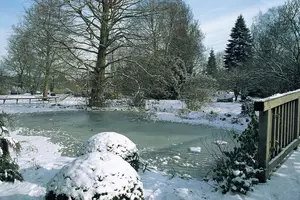
What your fish need most during winter is environmental consistency. They handle low temperatures easily, but major temperature fluctuations stress them and can lead to serious health issues.
Maintain proper depth: Keep your pond at least 60 cm (2 feet) deep. Since water is heaviest and warmest at the bottom, this depth creates a critical, undisturbed winter "safe zone" for your fish.
Adjust your waterfall: If you keep your waterfall running through winter, make sure it enters the pond in a shallow area. A waterfall dropping directly into the deepest section will mix cooler surface water into the safe zone where your fish are sheltering.
Use a pond skimmer: Running a waterfall in winter is fine, as long as the cooler water is pulled exclusively from the surface using a pond skimmer and returned directly to the surface zone.
3. Ice management and vital gas exchange
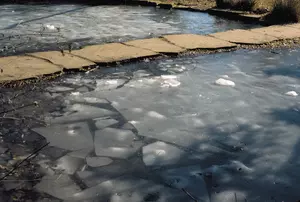
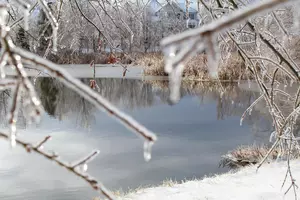
Even though your fish are breathing far less than they do in summer, they're still breathing. If your pond's surface freezes over completely in colder climates, harmful gases can't escape and the pond can't re-oxygenate itself.
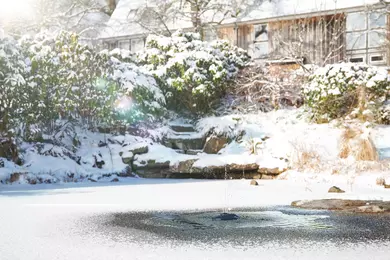
To keep your fish safe, maintain a small, open hole in the ice for proper gas exchange, using one of two methods:
The air system method (preferred): Place air stones on an upper shelf of the pond to keep the surface water moving and open.
The small pump method: Position a small pump on an upper shelf, pointed directly toward the surface so it bubbles just above the waterline.
Crucial equipment placement warning: Never place your pump or air stones down in the deep safe zone at the bottom of the pond. Doing so will violently mix warmer bottom water with the rest of the freezing pond, destroying the stable environment your fish depend on and leading to severe health issues.
By following these simple, preventative layout and feeding practices this winter, your fish will stay healthy and stress-free, ready and vibrant for the return of spring.